Weight benches
Flat, incline and decline formats, pad geometry, loading limits and the small details that determine fit.
A bench supports your body while you lift. The most useful specifications describe the positions you will use: flat pad height, backrest angles, seat adjustment, pad gap and the total permitted load. Overall height in an unspecified position is much less useful.
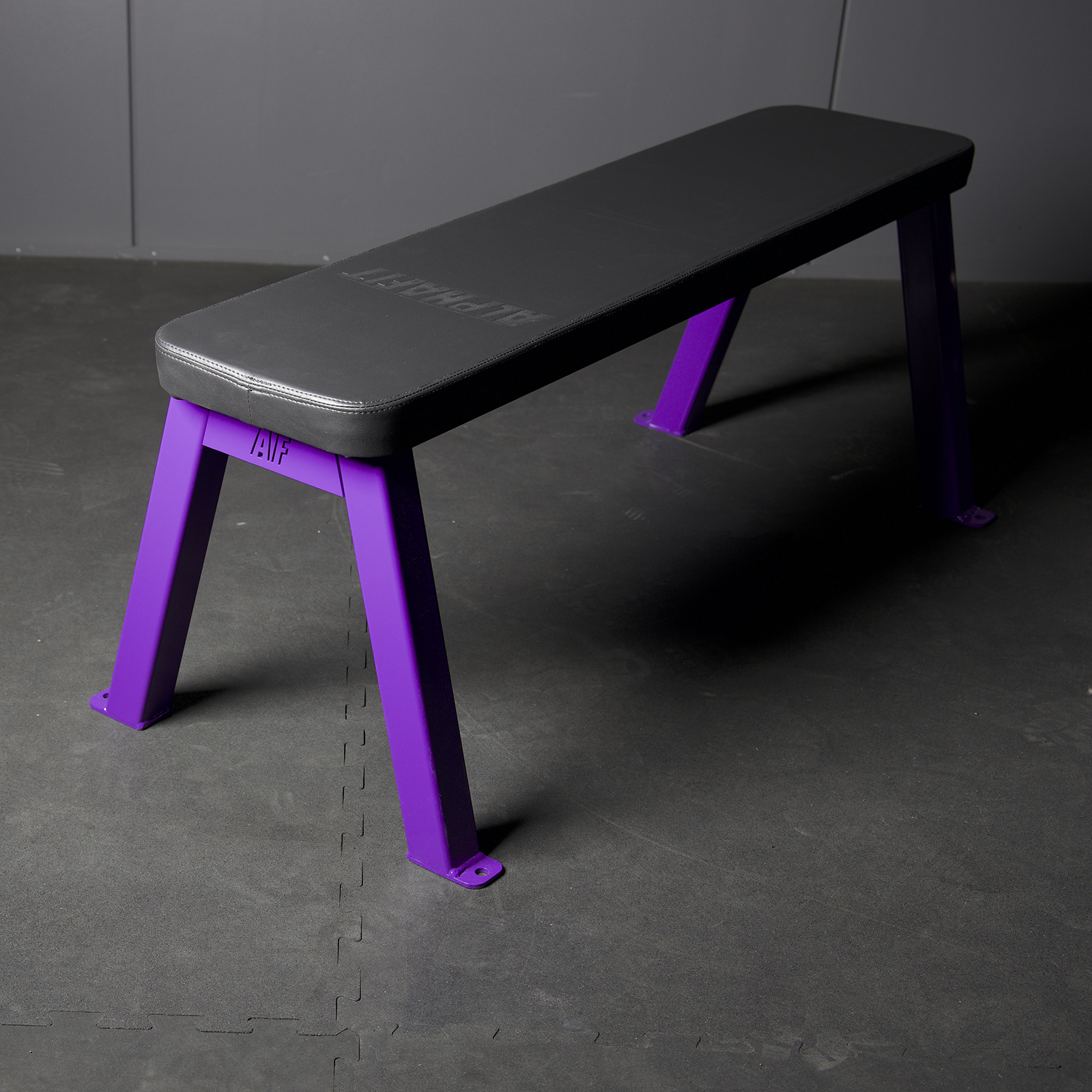
A fixed flat bench made in Australia, with steel legs and a single uninterrupted pad.
Photo: AlphaFit. AlphaFit gallery photograph of the flat bench in purple. Confirm the frame colour in the order.Flat, adjustable and FID
A fixed flat bench has one continuous pad and no angle mechanism. An adjustable bench adds incline positions. FID means flat, incline and decline, but the acronym does not specify the number of angles, the steepest incline or the way the user is held during decline work.
Check the actual angle list. A bench whose highest setting is 70 degrees serves a different purpose from one approaching upright. A flat bench can be a sensible permanent station when you rarely use angles; an adjustable model earns its extra size when you regularly move between pressing, seated and supported-row positions.
Sources: REP bench guide and terminology · Rogue Adjustable Bench 3.0 · Bodycraft CF601G local angle list
The measurements that determine comfort
Flat pad height affects whether you can establish your intended foot position. Measure to the top of the uncompressed pad, not to a frame rail. Pad width affects shoulder support and arm clearance. Check back-pad length with your head supported and your torso positioned for the lift.
On an adjustable bench, inspect the seat/backrest gap in the positions you use. Gap-reduction systems change how the pads meet, but may require another adjustment. The front foot also matters: a wide base can occupy the space where you prefer to put your feet.
Sources: REP bench guide and terminology · Rogue Adjustable Bench 3.0
Competition dimensions are a reference, not a comfort guarantee
The IPF’s March 2026 rules specify a bench at least 122 cm long, 29–32 cm wide and 42–45 cm high, measured to the uncompressed padded surface. Those are competition equipment dimensions. A product described as meeting the height requirement is not necessarily an IPF-approved competition bench.
A home buyer may prefer a different pad width or height. If you compete, training on a similar setup can reduce the change at a meet. If several people share a bench, check the shortest user’s foot contact and the tallest user’s back-pad support instead of choosing by overall size alone.
Sources: REP bench guide and terminology · IPF Technical Rulebook, March 2026, section 2.6
Adjustment, stability and storage
Ladder supports rest in selected notches; pop-pin and telescopic designs lock into holes. Inspect how the seat and backrest are secured, whether the frame sits evenly on your floor, and how easy it is to move without catching fingers near moving parts. A rated load should cover the intended user and lifting load under the manufacturer’s definition.
Wheels and a handle help with positioning. Vertical storage and folding are distinct features: a bench may stand on one end without folding at all. Use vertical storage only where the maker provides for it, and include the stored height in your room plan.
Sources: REP bench guide and terminology · Rogue Adjustable Bench 3.0 · Cyberfit FIDBNCH-LC
Australian examples and attachments
AlphaFit’s 50502 is a fixed flat bench. Cyberfit’s FIDBNCH-LC accepts optional front attachments. Bodycraft’s CF601G uses a ladder and lists its seven angles. REP offers several local bench configurations through Australian sellers. Compare the complete model and supplied accessories, including any leg restraint required for decline work.
Bench leg developers and preacher pads need matching sockets, pins and loading clearances. A shared brand name does not prove that an old attachment fits a newer bench. Ask the seller to identify both model numbers on the quote.
Sources: Bodycraft CF601G local angle list · Cyberfit FIDBNCH-LC · AlphaFit Flat Utility Bench · ATX bench leg attachment and inclusion list
Models mentioned in this article
AlphaFit Flat Utility Bench — 50502
An option for someone who mainly presses flat and values a simple locally made bench.
Specifications & buying options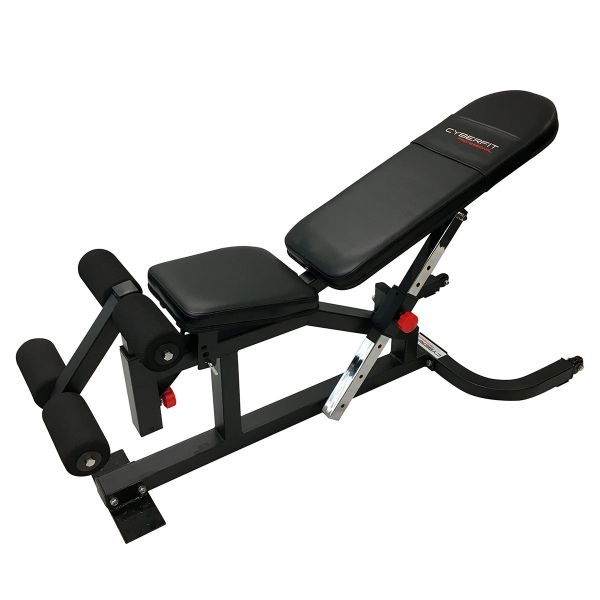
Cyberfit FIDBNCH-LC adjustable bench — bench only
Provides a relatively inexpensive route to decline work and a compatible leg or preacher attachment.
Specifications & buying options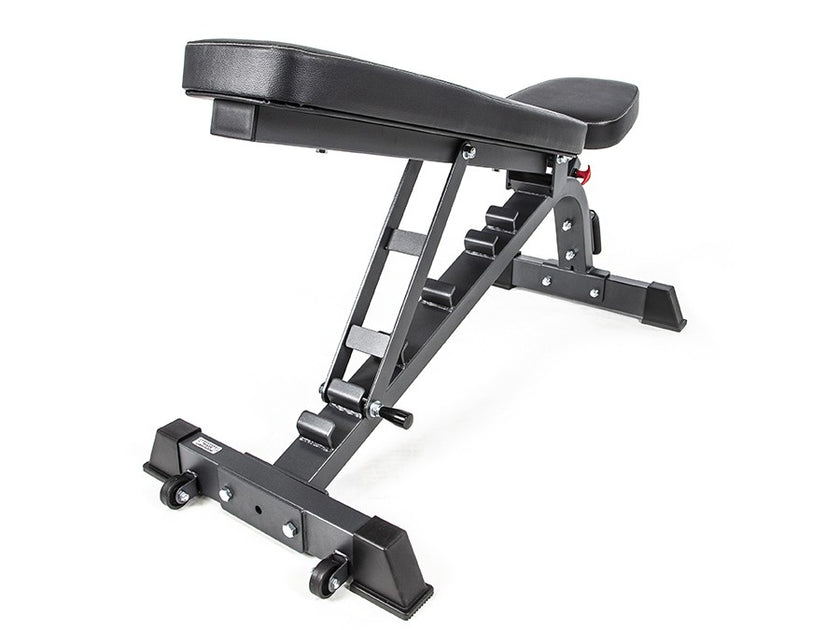
Bodycraft CF601G FID bench
Suits mixed dumbbell and cable work when the available angles match your training.
Specifications & buying options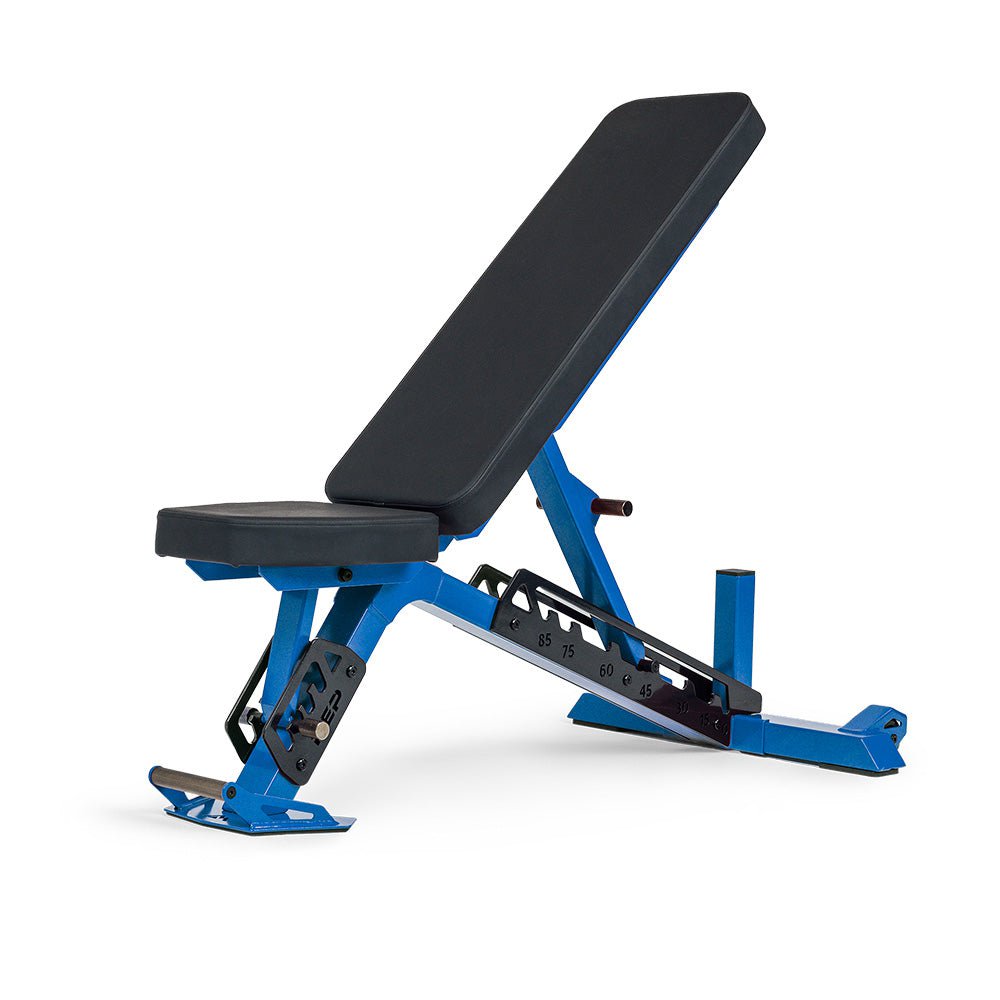
REP Nighthawk adjustable bench
Flat and incline work is its brief. The shorter, lighter frame is useful when the bench must move out of a rack or make room for another activity.
Specifications & buying options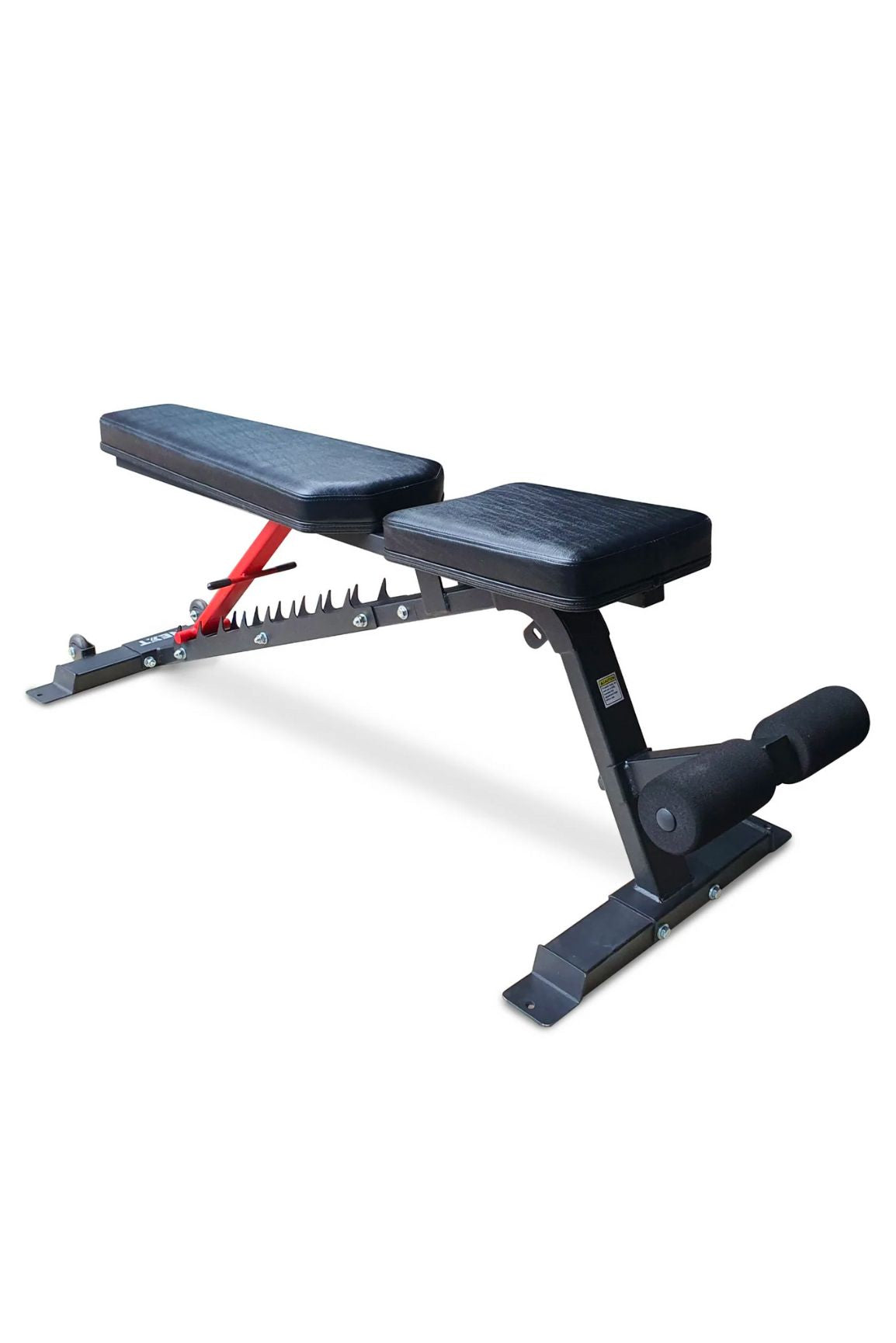
BodyIron Studio Utility FID Multi Bench
Worth comparing for a home setup that needs flat, incline and decline work at a moderate price. The included leg stabiliser gives it a different starting package from benches that charge separately for a roller.
Specifications & buying optionsSources & further reading
Checked 17 Oct 2026. The links below identify the sources used for this article.