Belt squat machines and attachments
Lever and cable designs, platform height, belt fit and the difference between a frame and an attachment.
A belt squat applies resistance through a belt around the hips while the lifter stands on a platform. The mechanism can be a lever or a cable-linked trolley. Belt comfort, the attachment point and the start/stop system matter as much as the plate capacity.
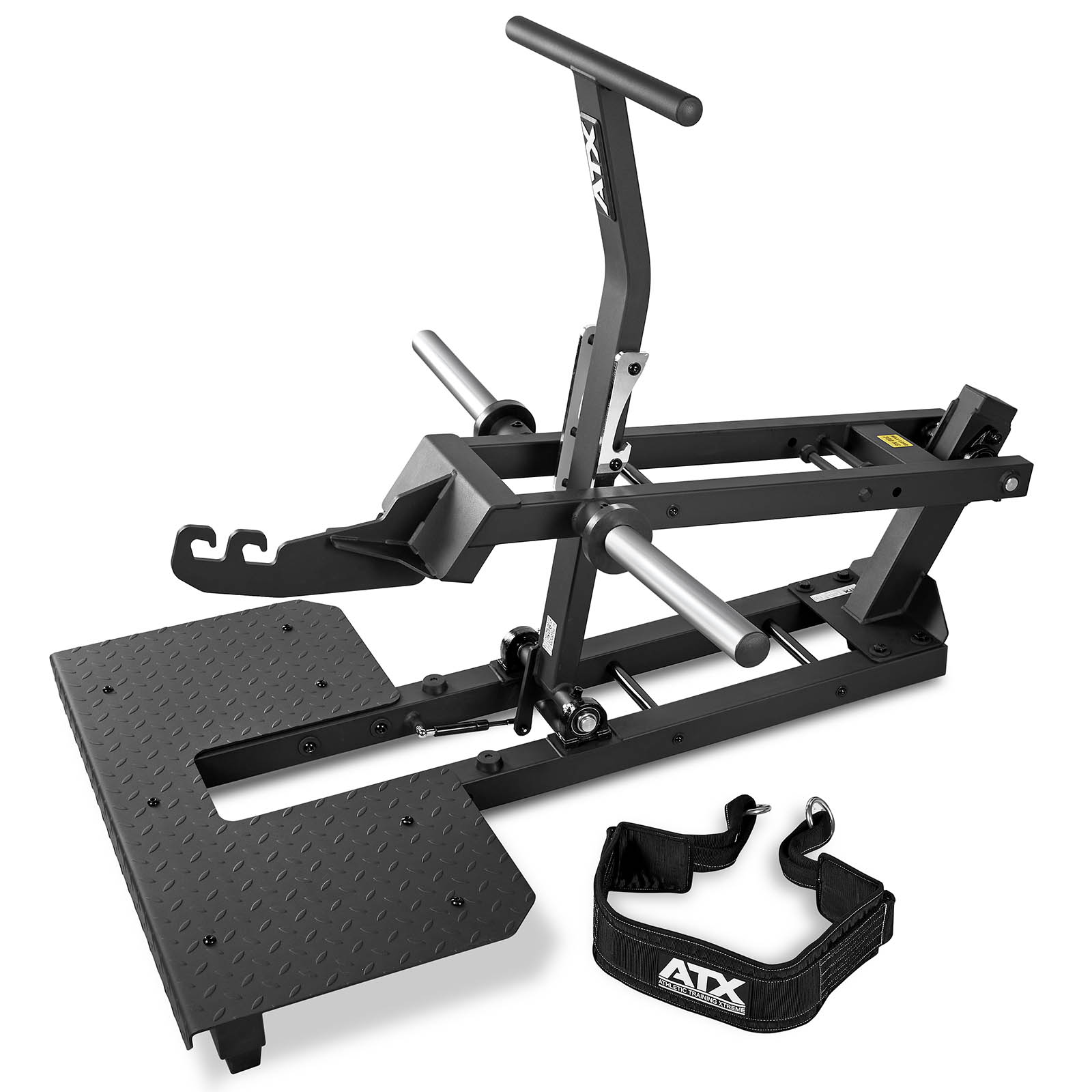
A standalone lever belt squat with an included belt, two start positions and a broad platform.
Photo: Sam’s Fitness / ATX. Base lever machine and included belt. Olympic plates and bands are separate.How the resistance reaches the belt
A lever design attaches the belt to an arm that rotates around a pivot. Moving the belt attachment or the plates changes their distances from that pivot. A cable design routes the belt connection to a moving trolley or weight source. These mechanisms do not share one universal relationship between loaded plates and exercise resistance.
ATX’s compact BSM-600 illustrates the lever format. Rogue’s Rhino uses a cable and trolley. Neither plate total should be read as a directly comparable barbell squat load. Log the machine and setup when tracking progression.
Sources: ATX BSM-600 standalone lever machine · Rogue Rhino mechanism and configurations · OpenStax — mechanical advantage
Standalone machine, rack attachment or rack package
A standalone unit brings its own base and platform. A rack attachment depends on a specified host frame and may occupy its front lifting area. Some systems are sold as a drop-in assembly or a complete rack package. The similar photographs can hide very different lists of included steel.
Rogue explicitly distinguishes standalone, rack and drop-in Rhino arrangements. ATX sells both a compact standalone machine and a separate rack-mounted belt-squat option. Identify the complete product code and host rack before pricing either one. A low attachment price does not include the rack, platform or plates unless the package says so.
Sources: ATX BSM-600 standalone lever machine · Rogue Rhino mechanism and configurations · ATX rack-mounted belt squat option
Fit the belt and working range
Try the belt at the bottom and top of your intended squat. Check whether its edges press into the thighs, whether the attachment hangs clear and whether you can reach the support and release handles. Chain or strap length affects the starting height and the range available before the machine reaches a stop.
A broad platform does not automatically provide more usable depth. The belt connection, lever arc and position of your feet also matter. On a showroom trial, use the same belt and attachment point that would arrive with your order; an alternative belt can change the experience.
Sources: ATX BSM-600 standalone lever machine · Rogue Rhino mechanism and configurations
Capacity and room planning
Record the plate-load limit separately from any stated user or combined load. Check sleeve diameter and usable length, then allow room to load both sides. A platform raises the standing position, so overhead clearance must be checked with the user on it rather than from the bare floor.
Not every belt squat is a low machine. RAW’s BS-T includes a tall frame with chin-up and dip fittings, whereas a compact lever unit has a different layout. Compare the configuration you will use, including the belt and moving arm, with your room’s doors, lights and other equipment.
Sources: ATX BSM-600 standalone lever machine · RAW BS-T dimensions and fittings
What to confirm before ordering
Ask whether the belt, chain or strap, clips, platform, storage horns and resistance-band fittings are included. For a rack attachment, request written compatibility for the exact rack series and mounting position. Confirm any anchoring requirements and the procedure for starting and ending a repetition.
For an existing rack, compare the time and space needed to fit the attachment with the footprint of a standalone machine. An attachment that blocks the bench position or must be removed between exercises changes how the room works. Check where it can be stored with its retaining mechanism engaged.
Sources: Rogue Rhino mechanism and configurations · ATX rack-mounted belt squat option · RAW BS-T dimensions and fittings
Models mentioned in this article
ATX BSM-600 Compact Belt Squat
Adds squat loading through a hip belt when you want an alternative to holding a bar across the shoulders.
Specifications & buying options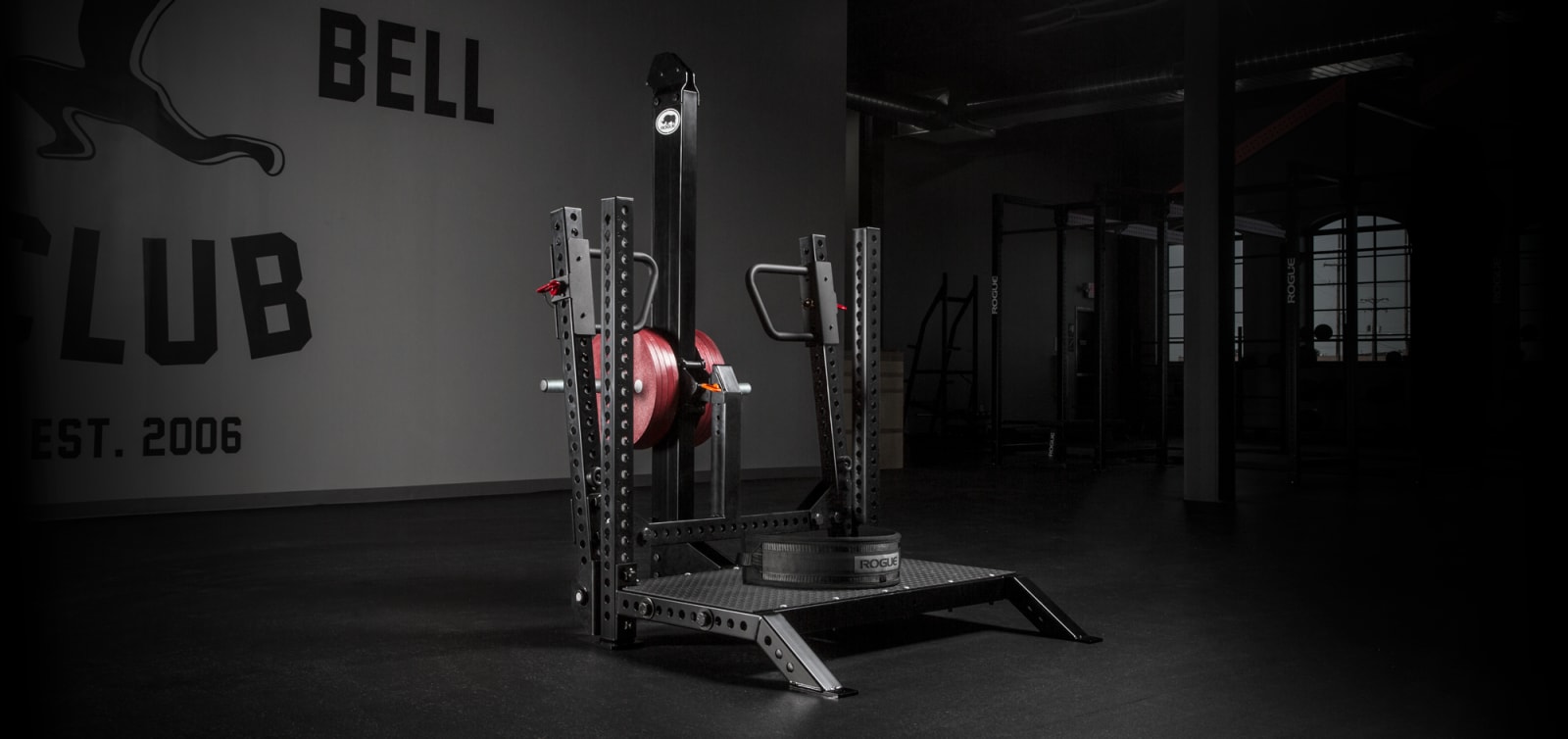
Rogue Monster Rhino Belt Squat — stand-alone
Regular belt squats can justify a dedicated station for leg work without a bar held on the shoulders. Keep a rack available for another lift or another person.
Specifications & buying optionsSources & further reading
Checked 17 Oct 2026. The links below identify the sources used for this article.