Cable machines and functional trainers
How stacks, ratios and cable travel change the resistance and exercises a station can provide.
A cable machine routes resistance through pulleys to a handle. Compare the force at the working handle, adjustment range and cable travel, rather than the combined weight printed on the stacks. Two machines with identical stack masses can feel very different.
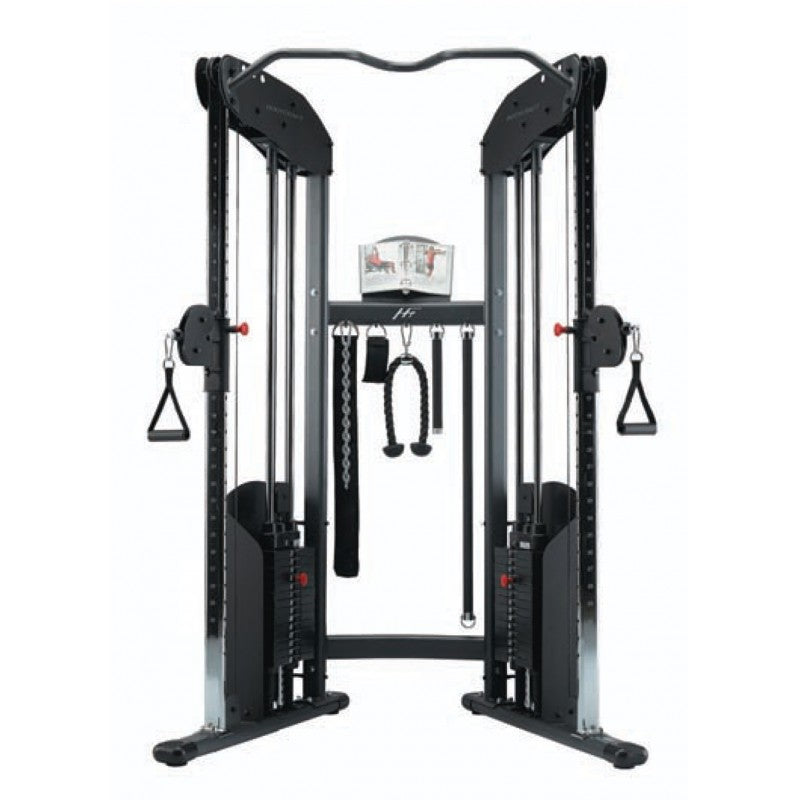
A standalone dual-stack trainer with swivelling cable outlets and a useful set of handles, bars and straps.
Photo: Elite Fitness Equipment / Bodycraft. Dual-stack trainer with included cable accessories. A bench is separate.The main arrangements
A lat-pulldown and low-row station supplies fixed high and low outlets, usually with a seat, thigh restraint or footplate. A functional trainer uses adjustable outlets for different pulling directions. A single cable column has one upright; a dual-column trainer offers two working sides. Either format may be freestanding, wall mounted or integrated with a rack.
Plate-loaded systems move plates placed on a carriage. Selectorised systems use a pin to choose plates in a fixed stack. Loose plates can be shared with other equipment, while a stack makes load changes quicker. Sharing plates is less convenient when you want a barbell and cable exercise set up together.
Sources: Bodycraft LHFTG Australian configuration · ATX FCR-780 outlet and stack arrangement · Rogue FM-HR cable configuration
Pulley ratio: a worked comparison
In an ideal 2:1 system, pulling the handle twice the distance that the stack rises halves the force required. A 4:1 arrangement gives one quarter of the stack weight at the handle. Real resistance also includes friction and the moving components, so these are nominal comparisons rather than calibration results.
For a hypothetical 90 kg stack, the nominal maximum is 90 kg at 1:1, 45 kg at 2:1 and 22.5 kg at 4:1. A 5 kg stack increment becomes 5, 2.5 or 1.25 kg respectively. Kilograms here are the familiar gym shorthand for weight-equivalent resistance; the stack’s mass itself has not changed.
| Stack-to-handle ratio | 90 kg selected | 5 kg stack increment |
|---|---|---|
| 1:1 | 90 kg equivalent | 5 kg equivalent |
| 2:1 | 45 kg equivalent | 2.5 kg equivalent |
| 4:1 | 22.5 kg equivalent | 1.25 kg equivalent |
Sources: OpenStax — mechanical advantage and pulleys · Force USA G15 — 2:1 and 4:1 examples
Read the ratio for the outlet you use
One frame can have different ratios at its adjustable trolleys, high outlet and low row. The Rogue FM-HR illustrates this with 2:1 functional-trainer outlets and a 1:1 pulldown/row arrangement. Connecting two handles can also change the effective configuration; follow the supplied routing rather than assuming that two cables always double the load.
Independent stacks let each side move against its own selection. A shared stack can serve several outlets, but simultaneous use and travel depend on the cable design. Ask whether two people can use the machine independently, and whether a bilateral movement uses the stated full travel.
Sources: ATX FCR-780 outlet and stack arrangement · Rogue FM-HR cable configuration
Cable travel and body fit
Travel is the available pull before the stack, carriage or cable reaches its limit. It matters for long rows, presses and movements performed away from the frame. Trolley-height adjustment is a different measurement. Also check the highest and lowest outlet positions, width between outlets, swivel movement, thigh restraint and foot support.
For Australian examples, Bodycraft’s LHFTG is a separate dual-stack station; the ATX FCR-780 puts cables around a full cage. These layouts occupy space differently. Mark out the exercise area in front and to the sides, including the bench and the user’s reach.
Sources: Bodycraft LHFTG Australian configuration · ATX FCR-780 outlet and stack arrangement · Rogue FM-HR cable configuration
What to put in the quote
Request the exact stack package, selected ratio at each outlet, useful cable travel and included handles. Add delivery, placement and assembly as separate lines. Ask which cables and pulleys are stocked locally and how replacement parts are identified. A tensile-strength figure for a cable is not the safe exercise load of the assembled machine.
Sources: Bodycraft LHFTG Australian configuration · Rogue FM-HR cable configuration · Force USA G15 — 2:1 and 4:1 examples
Models mentioned in this article
Bodycraft LHFTG functional trainer — dual 200 lb stacks
Fits a gym that already has its barbell equipment and needs an independent cable station.
Specifications & buying options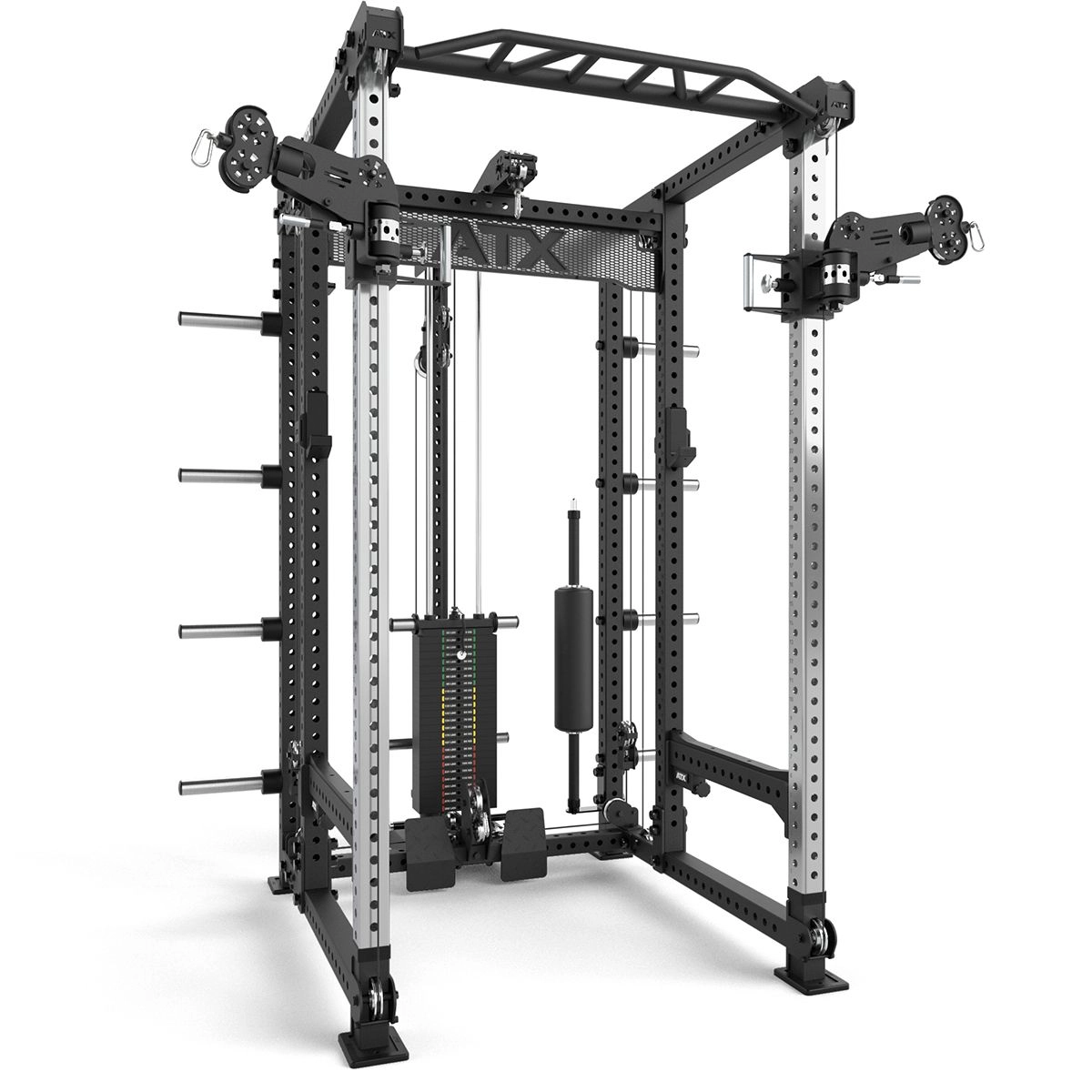
ATX FCR-780 Power Cage with Cables
It combines lifting inside a cage with cable exercises while keeping the guided Smith bar out of the package.
Specifications & buying options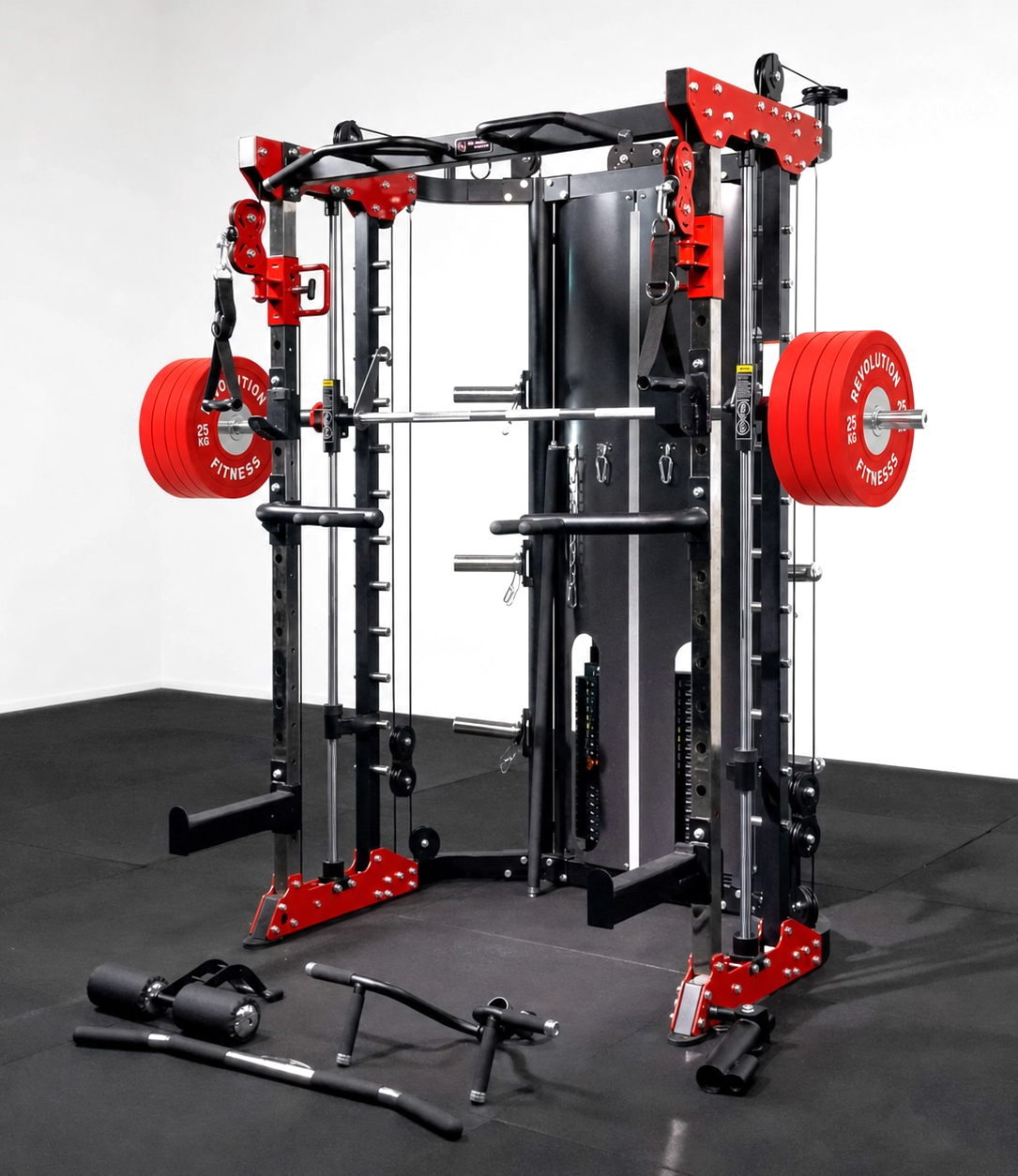
Revolution R5 Smith machine — base trainer
A local alternative when cable resistance matters more than having a full cage around the barbell.
Specifications & buying options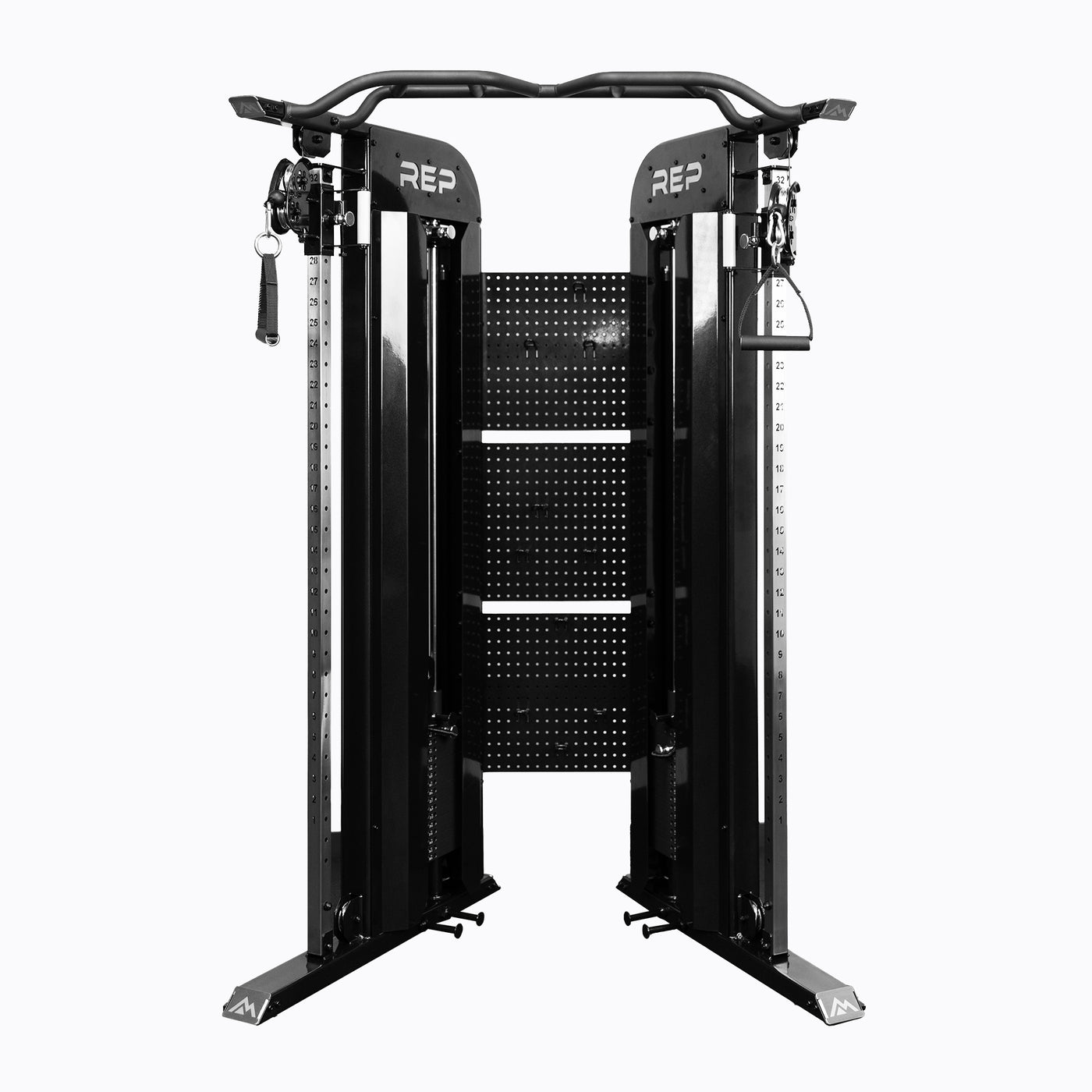
REP Arcadia — standard stacks
Add it beside an existing rack or Smith for flyes, paired handles and independently loaded sides. The shallow frame is useful where another full-depth station would crowd the room.
Specifications & buying options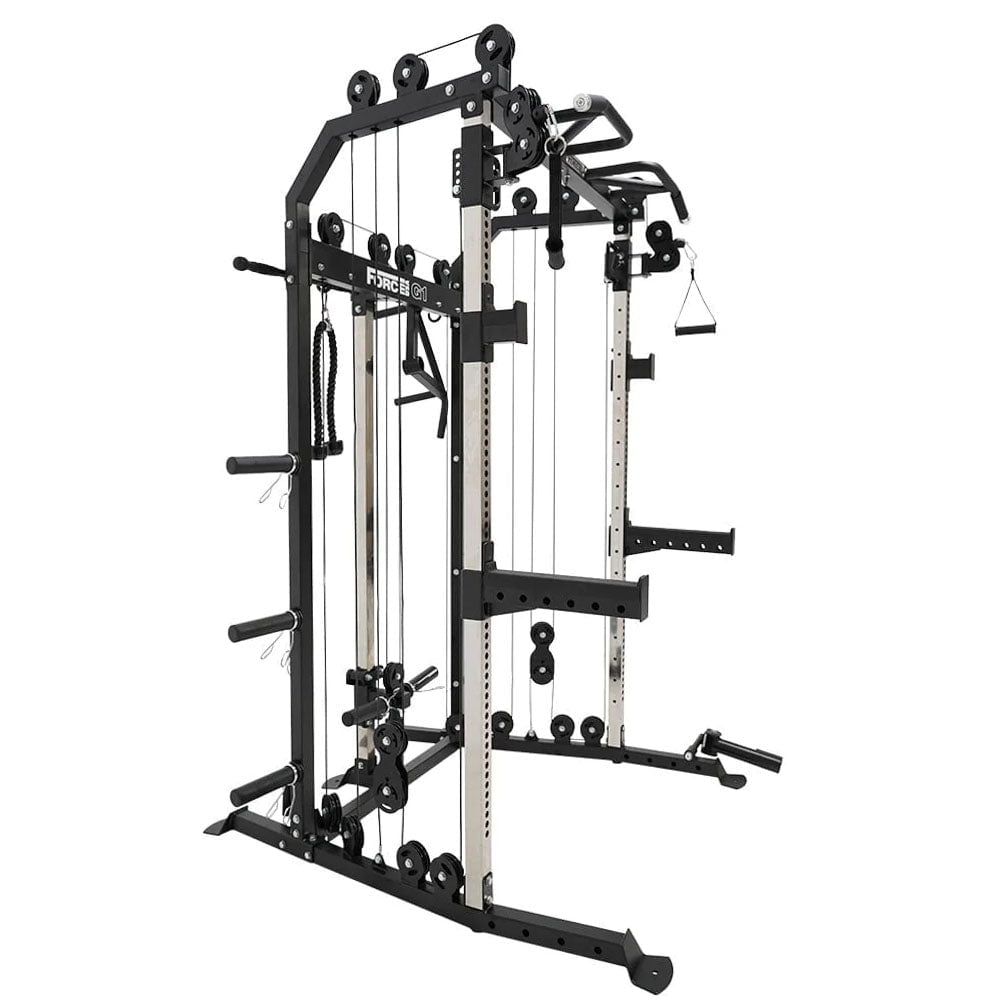
Force USA G1 V2
Reuse compatible plates and put the budget into a bench and bar. This is a straightforward way to add cables when a Smith machine is unnecessary.
Specifications & buying optionsSources & further reading
Checked 17 Oct 2026. The links below identify the sources used for this article.