Barbells and collars: dimensions, rotation and compatibility
Understand the shaft, sleeves, knurling and collars before matching a bar to Australian plates and a rack.
A barbell is a shaft with loading sleeves at its ends. The shaft determines how it feels in the hands and on the back; the sleeves determine which plates fit. Buy the bar, plates and collars as a compatible system.
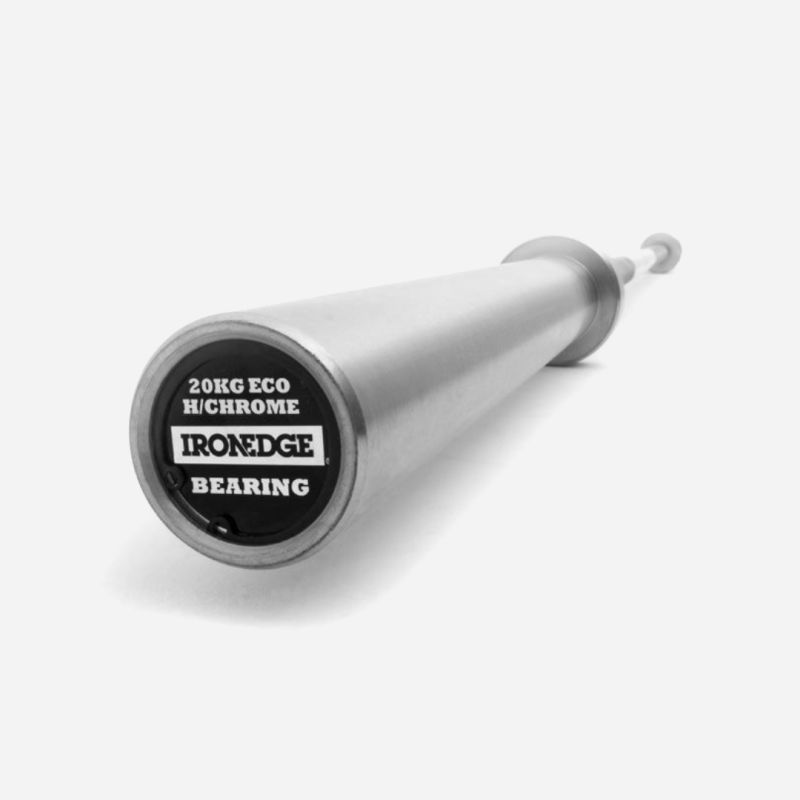
A 20 kg general-purpose bar with a 28 mm shaft, four needle bearings and both weightlifting and powerlifting marks. The centre is unknurled.
Photo: Iron Edge.Standard and Olympic describe different hardware
Australian shops use standard for several smaller sleeve sizes, so ask for the actual diameter. Olympic equipment commonly uses nominal 50 mm sleeves. A 28 mm grip on an Olympic bar does not mean that it takes 28 mm plates: shaft and sleeve are separate measurements.
A short bar can have Olympic sleeves yet fail to span a full-width rack. Check the distance between the inner sleeve shoulders against the J-hooks. Overall length then determines room clearance, while usable sleeve length determines the plates and collars that fit on each end.
Sources: IWF: equipment specification overview · IPF: technical rulebook effective March 2026 · Iron Edge: 20 kg Hard Chrome Eco bar
Choose the lifting type, then the details
Weightlifting and powerlifting place different demands on a bar. The IWF identifies 20 kg and 15 kg competition bars. The IPF rulebook permits a 28–29 mm shaft and 81 cm grip markings, but competition approval involves more than those two measurements. A bar described as powerlifting is not automatically approved for an IPF event.
For a home gym, a mixed-use bar can be a sensible first purchase. Choose the required bar mass and grip diameter for the user, then compare centre knurl, sleeve rotation and coating. Centre knurl can add contact on the back but also contacts the neck in a front rack. Knurl aggressiveness is a preference you can assess more reliably in person than from a label.
| Part or term | Meaning | Buying implication |
|---|---|---|
| Knurling | Pattern cut into the grip | Depth and sharpness affect contact; medium is not a universal scale |
| Bushings or bearings | Components allowing sleeve rotation | Assess the intended lifting use and service requirements |
| Whip | Elastic movement of the loaded bar | More flex is not an advantage for every lift |
| Loadable sleeve | Space available outside the shoulder | Subtract collar width before estimating plate capacity |
Sources: IWF: equipment specification overview · IPF: technical rulebook effective March 2026 · Iron Edge: 20 kg Hard Chrome Eco bar · Australian Barbell Company: configurable 20 kg bar without centre knurl
Strength numbers need context
Tensile strength, a load rating and the weight physically fitting on the sleeves are different limits. A published psi figure concerns material stress; it is not a weight you can convert directly into a safe lifting load. A bar can also experience very different bending forces when supported on the back, on J-hooks or on two safety arms.
Use the maker’s application and warranty conditions alongside its figures. Avoid paying for a larger number while overlooking a shaft you cannot grip comfortably or sleeves too short for your plates. Record the exact finish and model: a familiar product name may cover several different bearing and sleeve options.
Sources: Iron Edge: 20 kg Hard Chrome Eco bar · Australian Barbell Company: configurable 20 kg bar without centre knurl
Collars finish the system
Spring collars, lever clamps and competition collars secure plates in different ways. Match their stated diameter to the sleeve and check firm closure on the actual bar. Do not count a lightweight pair as a known 5 kg addition to the lift: the IWF’s specified competition collars weigh 2.5 kg each, while everyday clamps can be much lighter.
For a useful Australian shortlist, compare Iron Edge’s Eco bearing bar with the configured bars from Australian Barbell Company and the local offers on other profiles. Include collars and smaller plates in the delivered cost. Leave space at both ends for loading, and keep the bar’s care instructions with the purchase record so its finish and rotating parts receive the appropriate maintenance.
Sources: IWF: equipment specification overview · Iron Edge: 20 kg Hard Chrome Eco bar · Australian Barbell Company: configurable 20 kg bar without centre knurl · Little Bloke Fitness: Olympic locking collars
Models mentioned in this article
Iron Edge Hard Chrome Eco Barbell — 20 kg
A reasonably priced local option for mixed barbell training when you want rotating sleeves and a full-length bar without a centre knurl.
Specifications & buying options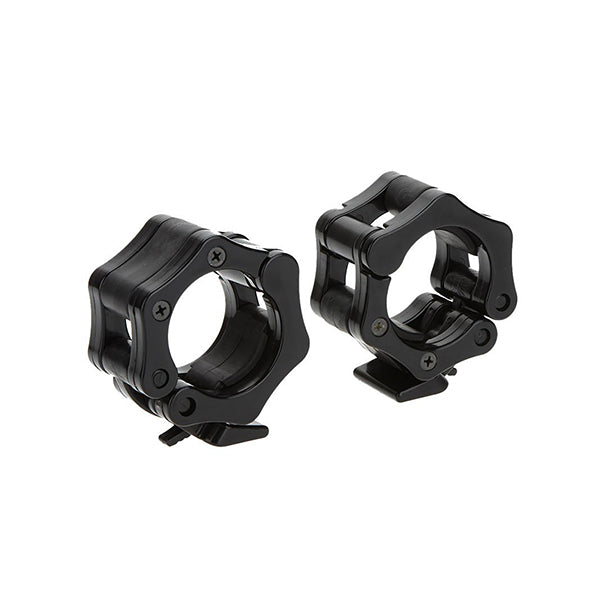
360 Strength Nylon Olympic Locking Collars — black pair
A simple way to secure compatible plates when speed of changing weights matters more than competition-calibrated collar mass.
Specifications & buying options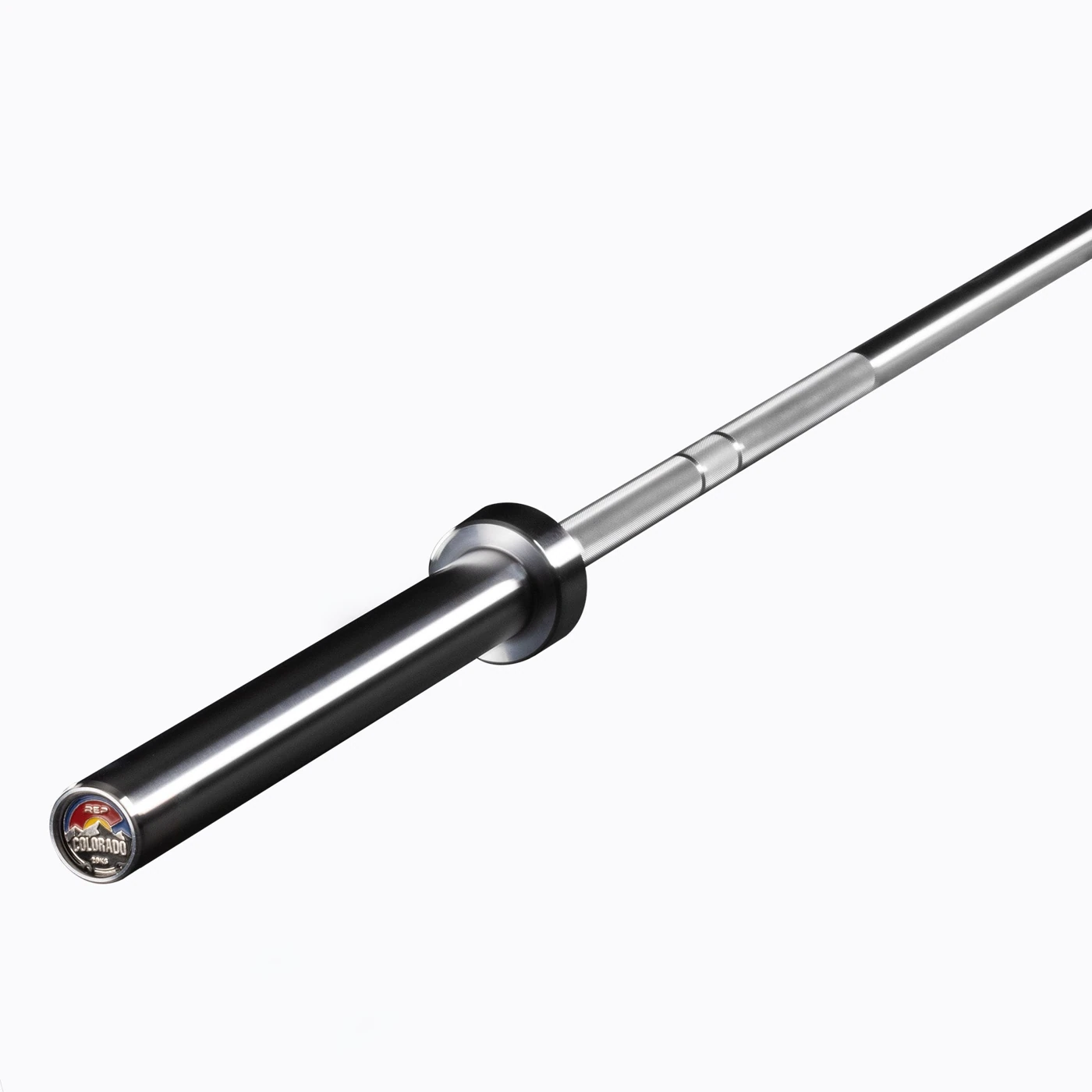
REP Colorado Bar 20 kg — hard chrome
One bar for presses, squats and Olympic-lift variations. The smooth centre is useful when the bar regularly passes through a front-rack position.
Specifications & buying options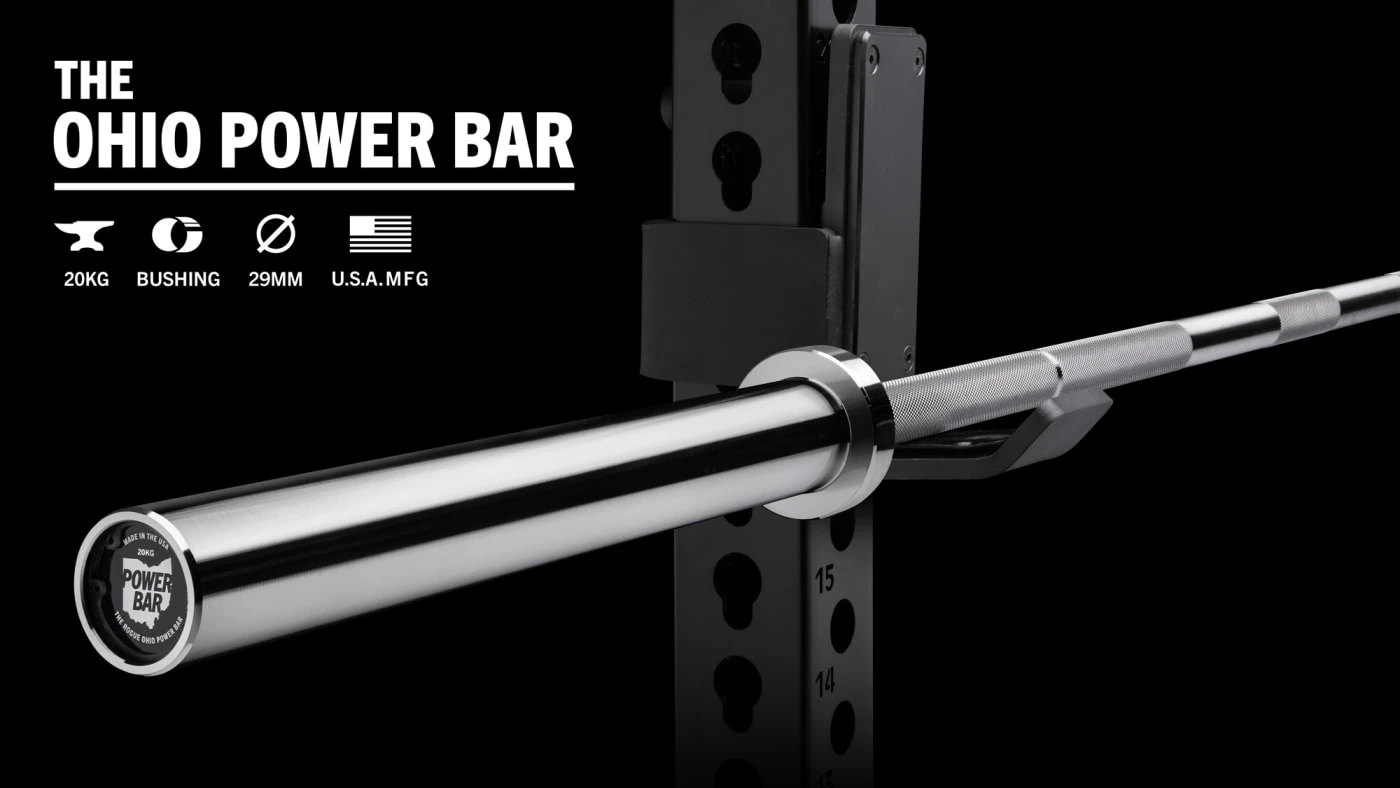
Rogue Ohio Power Bar 20 kg — stainless/chrome
For a gym centred on squat, bench and deadlift, the shaft and grip give a clear reason to choose it. The stainless version also has an Australian buying route.
Specifications & buying options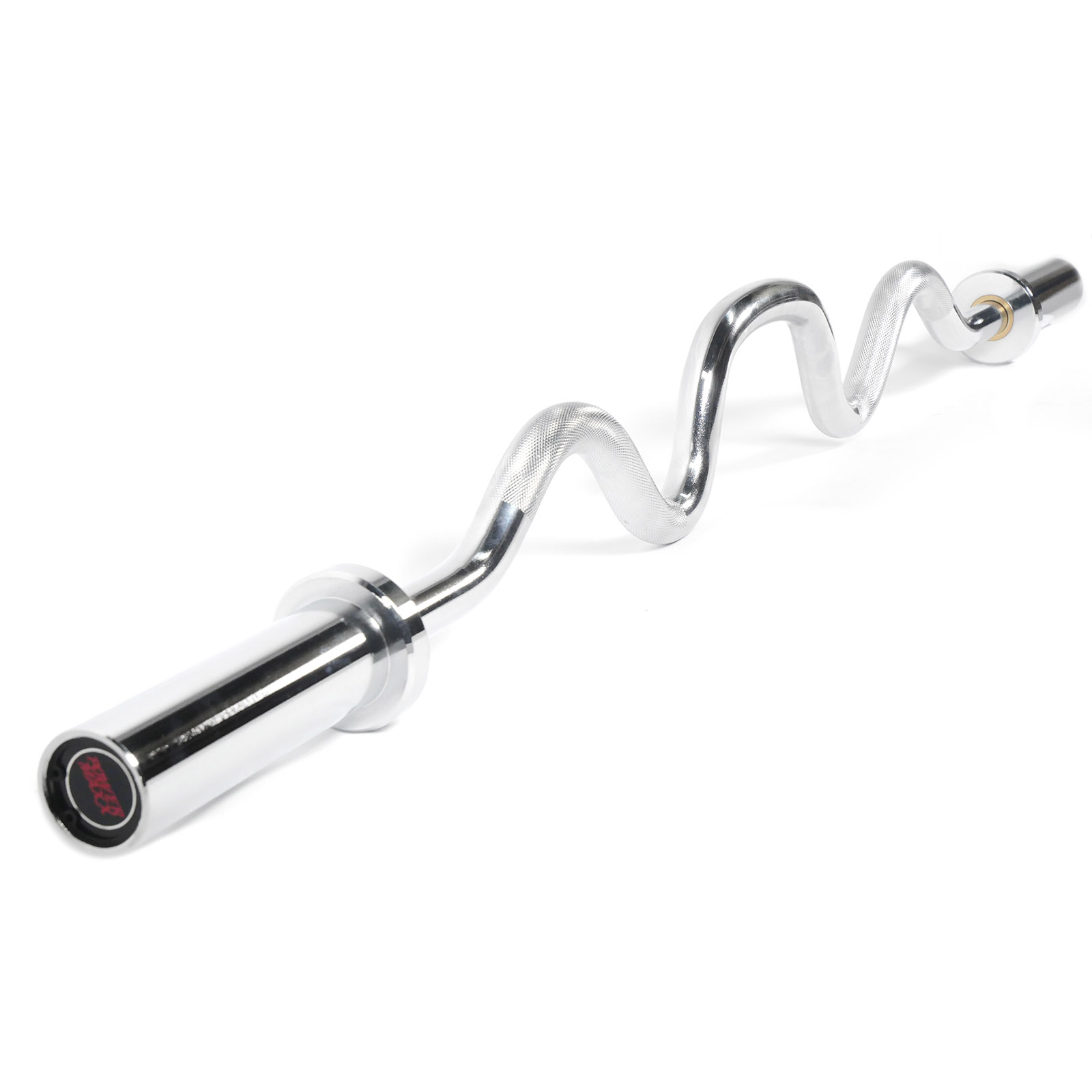
Power Maxx Olympic Super Curl Bar
Consider it if the steeper hand angle suits your curls or extensions. It uses the Olympic plates from a larger barbell setup, so it can add an exercise without another weight system.
Specifications & buying optionsSources & further reading
Checked 17 Oct 2026. The links below identify the sources used for this article.